
Our Programs
Conservatory Program
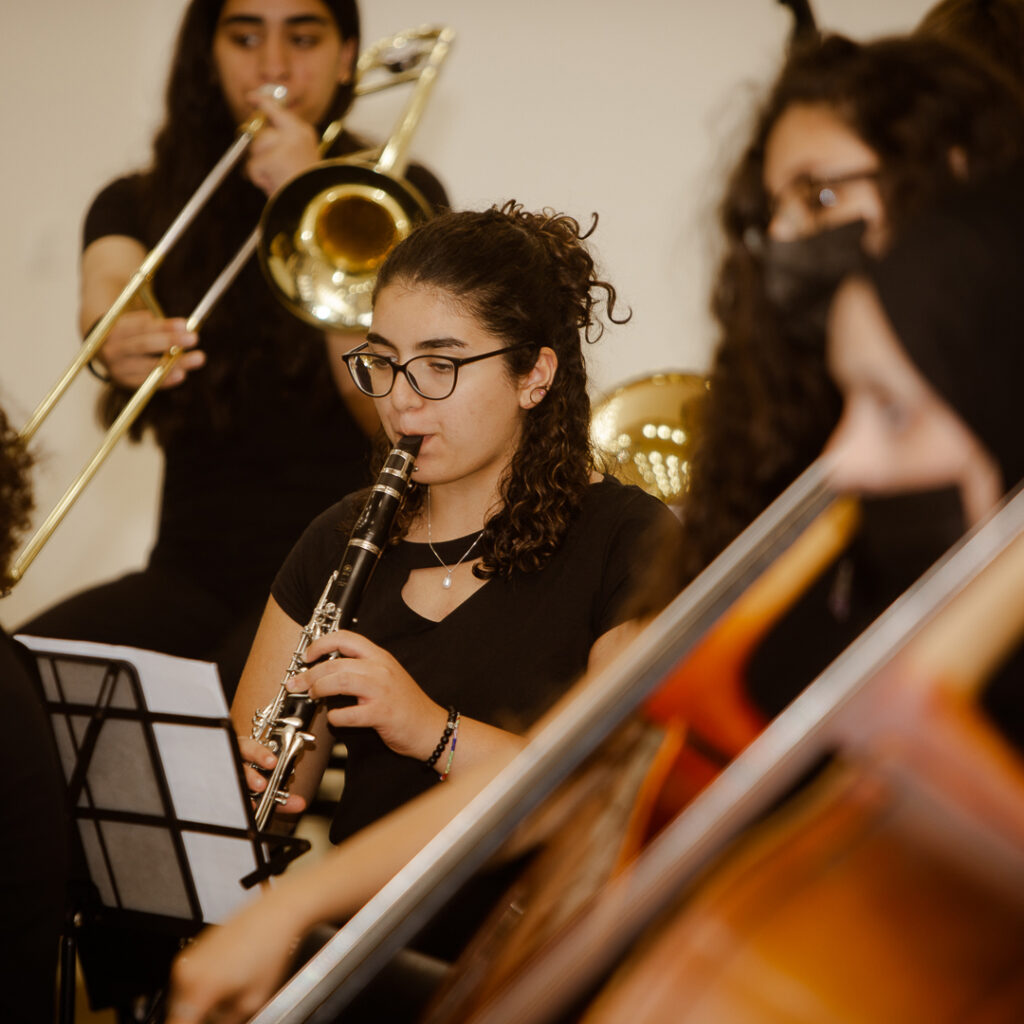
The conservatory program forms the core of the Center’s educational activity.
Through a structured and integrated curriculum, students receive rigorous musical training that combines individual instrumental instruction with collective musical practice.
The program includes:
- Individual instrumental lessons
- Chamber music
- Orchestra
- Choir
- Music theory and musicianship
- Solfège
Beyond technical training, students develop musical interpretation, attentive listening, and the collaborative discipline essential to ensemble performance.
Through concerts, artistic projects, and encounters with international musicians, the program places young performers in direct contact with the professional musical world and prepares those who wish to pursue advanced musical studies internationally.
Early Education
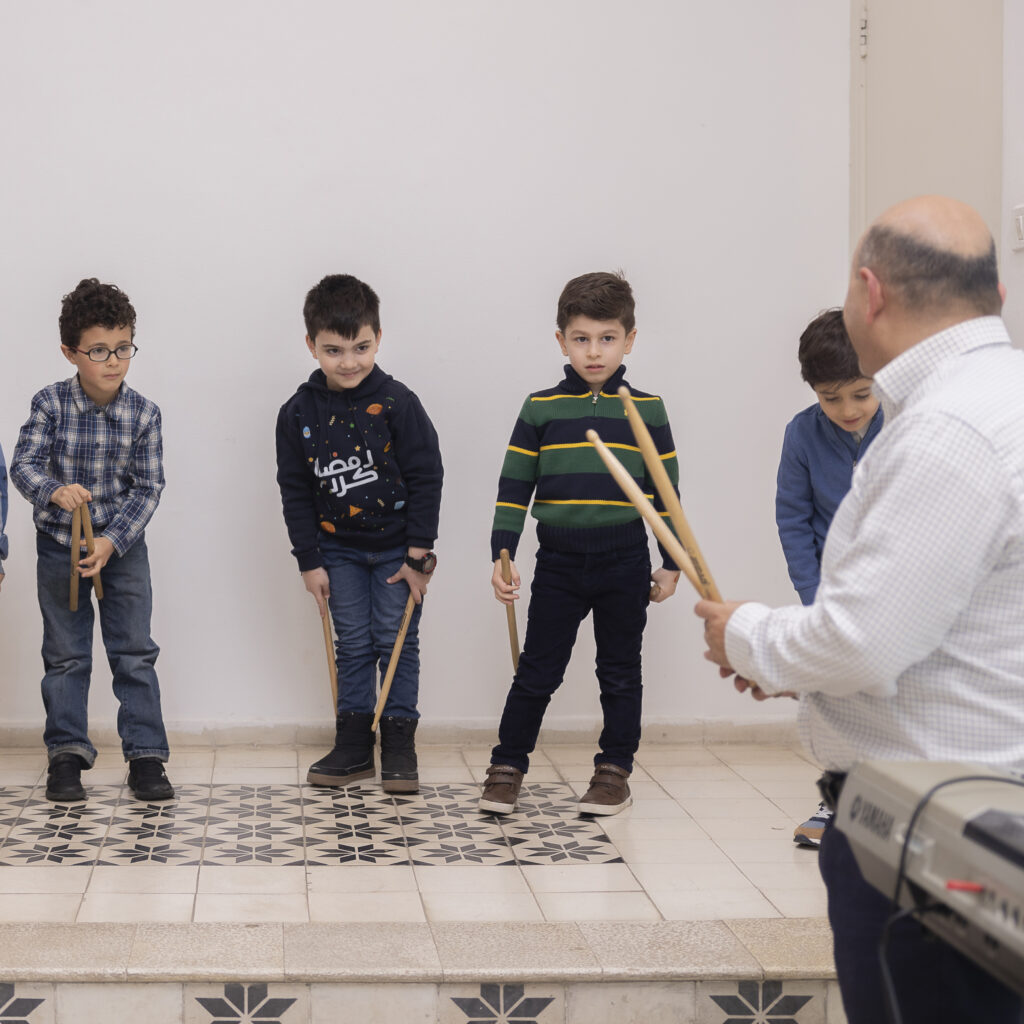
Alongside its conservatory program, the Barenboim-Said Center for Music develops early music education initiatives for younger children.
These programs are implemented in kindergarten settings, allowing music education to reach children across different communities.
Through collective musical activities combining rhythm, singing, listening, and creative exploration, children are introduced to music as a shared practice, engaging attention, coordination, and listening.
Beyond early musical learning, the program seeks to foster curiosity, confidence, and collective engagement, creating meaningful first encounters with artistic practice.
At this stage, such experiences play a fundamental role in the way children begin to relate to themselves, to others, and to the world around them. For many children, these initiatives represent a first access point to structured music education and help nurture the next generation of young musicians.
Music Appreciation
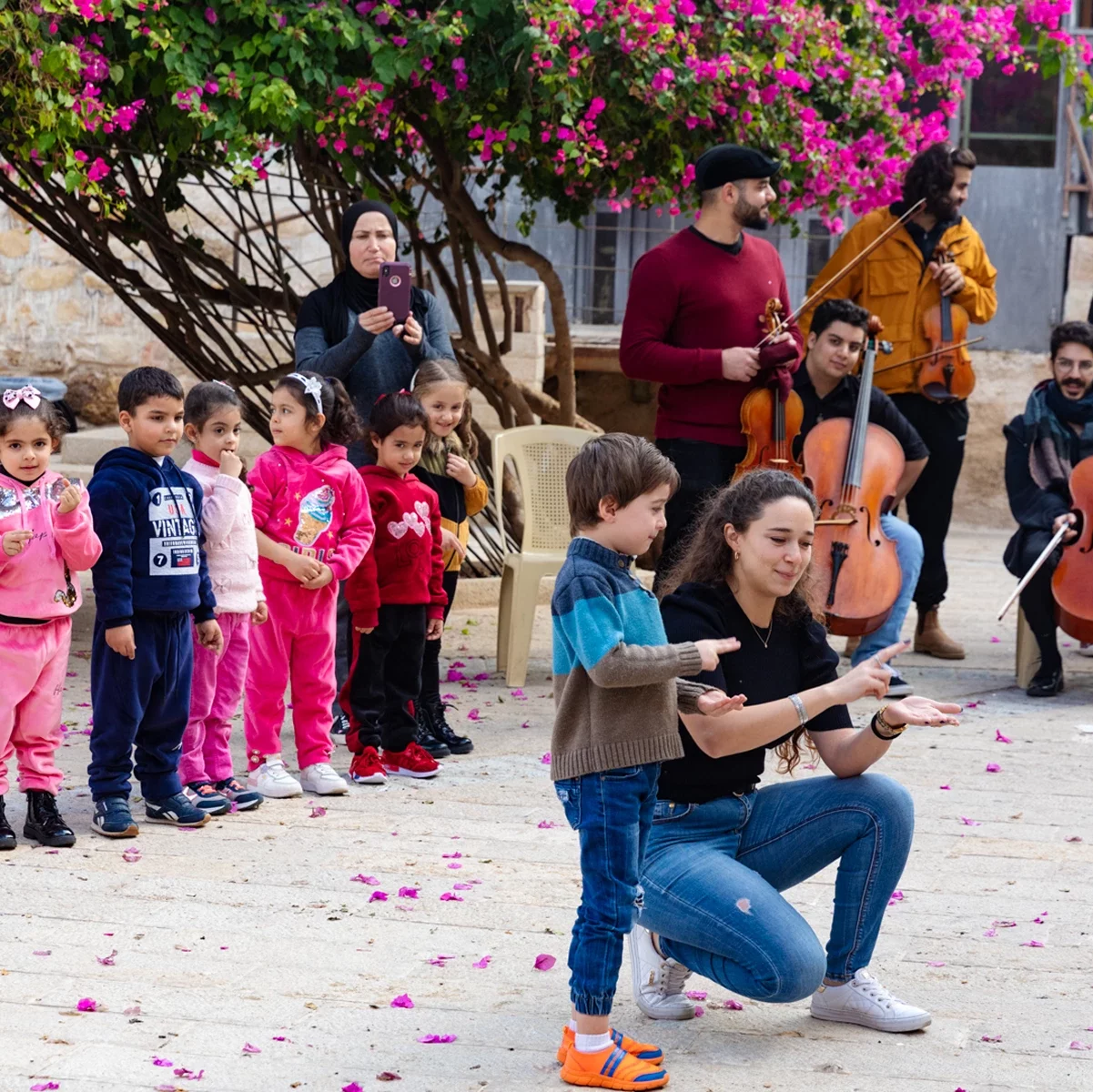
The Barenboim-Said Center for Music develops Music Appreciation programs both at the Center and in schools, creating points of entry into music education for children beyond the Center and reaching a broader range of communities.
Through listening, rhythm, singing, the discovery of musical instruments, and the viewing of orchestral and instrumental performances, students develop their musical hearing and their relationship to music. At the Center, classes are held in small groups, allowing close interaction between teachers, students, and families. In schools, larger groups are introduced to music through collective formats.
These programs play a key role in identifying students with strong musical potential and in connecting them to further musical training at the Center.
The program is currently delivered in several schools in Ramallah, including St. Joseph School, the Girls’ School, the Evangelical School, and the Greek Catholic School, with one class per week for students from Grade 1 to Grade 5.
Collective Practice
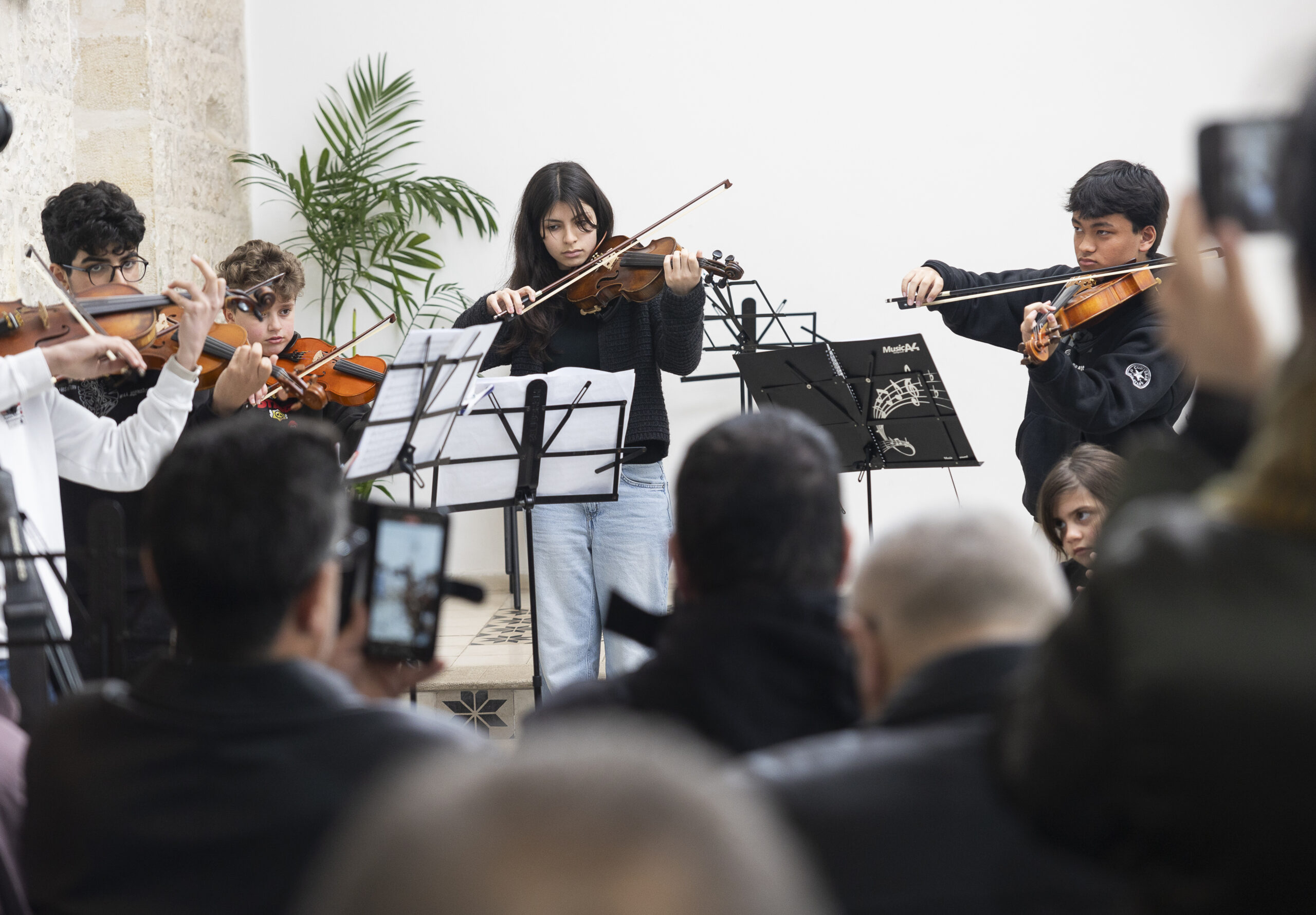
Ensemble work, orchestra, and choir are spaces in which each musician learns to develop and sustain their own voice, while engaging attentively with others.
Playing together requires holding one’s musical line with clarity and intention, while listening closely to the voices around it. It is through this balance that music takes shape as the coexistence of distinct voices within a shared structure.
Through this work, students experience music as a fundamentally relational practice, where meaning emerges from attention, dialogue, and the balance between individual expression and collective form.
Choral singing, chamber music, and orchestral practice are integral to the curriculum and form a continuous thread throughout the student’s training. Students engage with each of these practices as part of their development, moving between different collective settings that shape their musicianship in distinct ways.